


Face masks can be a powerful step in caring for oily skin, but not all ingredients support balance. The right ones help remove excess oil and refine how skin looks, while the wrong ones can leave skin feeling tight, uneven, or uncomfortable.
Knowing what to look for makes all the difference.
Why Face Masks Matter for Oily Skin
Oily skin often benefits from targeted care beyond daily cleansing. A well-chosen mask can help:
- Remove excess surface oil.
- Improve the look of congested areas.
- Support a smoother, more even appearance.
- Refresh skin without over-drying.
The key is balance, not stripping the skin.
Ingredients That Work Well for Oily Skin
These ingredients help support a clearer, more balanced look without overwhelming the skin.
Clay
Clay is one of the most trusted ingredients for oily skin.
- Helps absorb excess oil
- Leaves skin feeling fresh and clean
- Supports a more refined appearance
Common types include kaolin and bentonite, both known for their oil absorbing qualities.
Charcoal
Charcoal is often used to draw out surface buildup.
- Helps remove impurities from the skin’s surface
- Leaves skin looking clearer
- Pairs well with clay-based masks
It is especially helpful when skin feels congested.
Seaweed Extracts
Seaweed offers a more balanced approach.
- Provides lightweight hydration
- Delivers mineral-rich support
- Helps skin feel refreshed without dryness
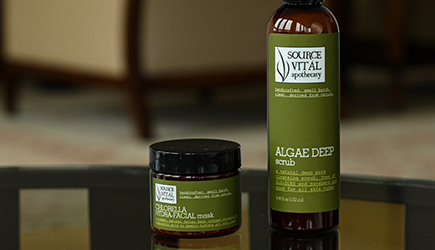
This aligns closely with Source Vitál’s focus on nourishing the skin with ocean based ingredients .
Aloe Vera
Aloe helps keep skin comfortable while using oil absorbing masks.
- Light hydration
- Calming feel
- Supports balance
It helps prevent that overly tight feeling after masking.
Enzymes
Gentle enzymes help smooth the skin’s surface.
- Improve the look of uneven texture.
- Support a brighter, more refined appearance.
- Offer a softer alternative to harsher exfoliation.
Ingredients to Be Mindful Of
Some ingredients can feel too heavy or too aggressive for oily skin, especially in mask form.
Heavy Oils and Butters
- May feel too rich
- Can leave skin feeling coated
- Not always ideal for areas prone to congestion
Strong Exfoliating Acids Used Too Often
- Can leave skin feeling stripped
- May increase visible oiliness over time
- Best used in moderation
Harsh Physical Scrubs
- Can feel abrasive
- May leave skin looking uneven
- Often unnecessary when gentler options are available
How to Use Face Masks Effectively
Using the right ingredients is only part of the process.
- Apply to clean, slightly damp skin.
- Use a thin, even layer.
- Leave on as directed, not longer.
- Rinse gently without scrubbing.
- Follow with lightweight hydration.
Skin should feel fresh and balanced, not tight.
How Often Should You Use a Mask?
For most oily skin types:
- One to two times per week is enough.
- Adjust based on how your skin feels.
- Avoid using multiple strong masks in the same week.
Consistency matters more than frequency.
A Balanced Masking Routine
You do not need to rely on one type of mask.
A simple approach:
- Use a clay or charcoal mask when the skin feels more oily.
- Use a hydrating or seaweed-based mask when skin feels uneven.
- Rotate based on your skin’s needs.
This keeps your routine supportive and flexible.
Frequently Asked Questions
Are clay masks good for oily skin?
Yes. Clay helps absorb excess oil and leaves skin feeling fresh when used appropriately.
Can oily skin use hydrating masks?
Yes. Lightweight hydration helps maintain balance and can improve how skin looks and feels.
Should I use a mask every day?
Most oily skin types do better with one to two times per week.
Why does my skin feel tight after a mask?
This may mean the mask is too strong or left on too long. A more balanced formula may feel more comfortable.